

As Antitrust Becomes a Frontline Battleground for Democracy, Are States Ready?
Trump is turning antitrust enforcement into an authoritarian corruption racket. State AGs are stepping up to fill the void – but they'll need more firepower to sustain the fight.

There were dramatic scenes in a Manhattan courthouse last Monday as the case against America’s most despised live entertainment monopoly fractured in two.
Lawyers for the federal government and dozens of states were making the case that Live Nation–Ticketmaster needed to be broken up. The company has built a stranglehold over its industry, taking control of 78% of large amphitheatres and 86% of major concert venue ticket sales nationwide.
Over the first five days of what was expected to be a weeks-long trial, attorneys outlined how the company bought up rivals, bullied venues, and retaliated against those who worked with competitors. The jury heard a recorded call of the CEO threatening a venue owner, read internal messages of staff mocking “stupid” fans and bragging about “robbing them blind,” and were told that Ticketmaster’s meltdown during the Taylor Swift’s Eras Tour shows what happens when one company controls everything and answers to no one.
Then, a shock twist.
The Trump Administration abruptly revealed that it had settled with the $38 billion company – blindsiding the state attorneys general who had joined the case, drawing an angry response from the judge, and sparking criticism within Trump’s own base.
The decision – which came after Live Nation donated $500,000 to Trump’s inauguration, hired Trump-world lobbyists including Kellyanne Conway, and appointed a Trump ally to its board – is the latest in a string of antitrust scandals which might consume any other administration.
Since the start of his second term, Trump has turned antitrust enforcement into an instrument of personal and political power – deploying it to punish enemies, gain leverage over news outlets, and reward those who promise favors and support him financially.
Media companies have paid huge settlements to the president and bowed to political pressure over coverage – ABC suspended Jimmy Kimmel Live!, CBS cancelled The Late Show and handed its newsroom to right-wing operator Bari Weiss, and Paramount pledged “sweeping changes” if it takes over CNN.
The president has fired or forced out several top antitrust enforcers amid pressure to drop cases – those include Biden FTC appointee Alvaro Bedoya and Trump appointee Rebecca Kelly Slaughter, and Trump DOJ appointees Gail Slater, Roger Alford and Bill Rinner.
Indeed, the day the White House pushed out Slater – the respected head of the DOJ’s Antitrust Division – Live Nation stocks jumped over 5%.
But there is a check on Trump’s power, if it can hold in the years ahead.
Armed with the independent authority to enforce federal antitrust law, dozens of state attorneys general – Democratic and Republican alike – are stepping up to take on the cases Trump’s DOJ has abandoned.
“We cannot agree to it,” New York Attorney General Letitia James said after the DOJ’s retreat. James is now leading a bipartisan coalition of 37 AGs who are pursuing the Ticketmaster case independently.
Notably among them: Texas AG Ken Paxton, a Trump ally currently locked in a fierce senate primary runoff against four-term incumbent John Cornyn. He’s not the only member of Trump’s coalition to oppose the deal: “Another big win for lobbyists,” lamented MAGA influencer Laura Loomer on X as she reported the settlement.
A New Era for Law Enforcement
The relationship between state and federal antitrust enforcers has historically been cooperative and complementary, insiders say, punctuated by occasional clashes over strategy and settlements.
That relationship held through Trump’s first term and through the first year of his second, even as many of states led high-profile challenges to other Trump policies, such as mass deportations.
But this year, the relationship is rapidly turning adversarial.
The antitrust division with Illinois Attorney General Kwame Raoul – seen as one of the leading enforcement teams in the country – told Liberty and Power that while their staff-level relationship remains strong, they are “increasingly concerned” about “political interests subverting the institutional knowledge, expertise and decision-making” of DOJ lawyers.
Indeed, in a sharp court filing following the Live Nation settlement last week, dozens of states wrote that they had been deliberately “kept in the dark and excluded” from discussions. “The United States is not handing off a baton to finish a race,” they wrote. “It is leaving a project halfway through construction, while taking the lead crew members, supplies, and designs with it.”
After decades of joint actions, states are directly challenging other Trump administration decisions on antitrust.
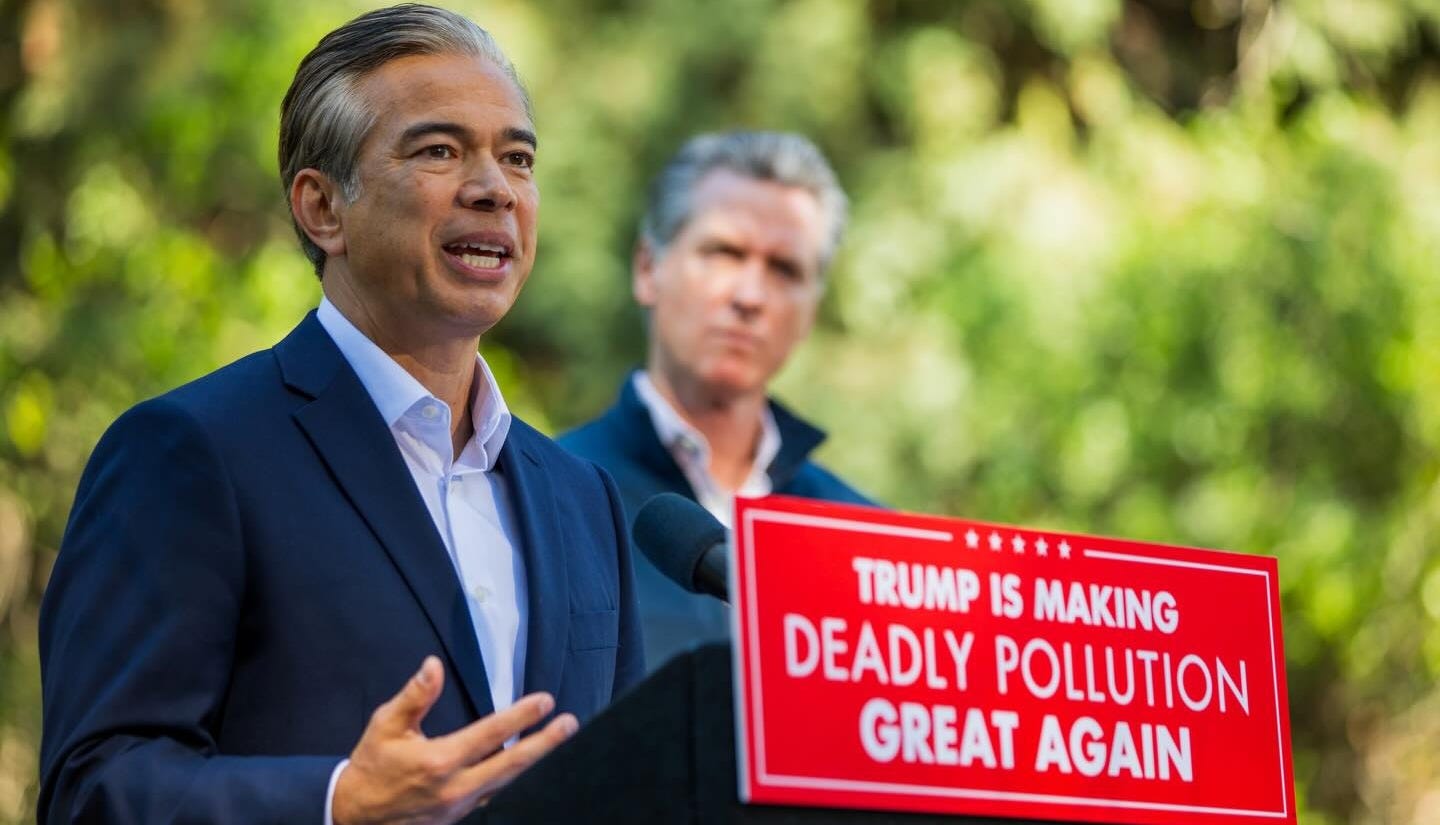
In Sacramento this week, California Attorney General Rob Bonta filed a suit signed by eight states to challenge the merger of the Tegna and Nexstar broadcast stations.
The DOJ cleared the deal even though it clearly breaches FCC ownership limits and required a federal waiver – Trump had demanded that the department “get that deal done” in order to “knock out the fake news.” Nexstar, perhaps not incidentally, was one of the first stations to block Jimmy Kimmel Live! after the administration blasted the late-night host for comments following the Charlie Kirk assassination.
In Denver, Colorado Attorney General Phil Weiser recently took up another abandoned federal case – challenging a $14 billion merger between Hewlett Packard and a major rival that had also been settled by the Trump administration amid charges of back room dealing.
Last week, Weiser sought to block the “corrupted” settlement itself, alleging that throughout the federal merger review, “threats were made against the head of the antitrust division, Gail Slater, and her top deputies, who were sidelined from the decisive round of negotiations and eventually ousted from the Justice Department.”
One of those deputies, Roger Alford, has since accused senior officials of having “perverted justice” in what he called a “pay-to-play” scandal.
Then, there’s the biggest and most politically charged case: The Paramount–Warner Bros. Discovery merger.
The $110 billion deal would place both CBS and CNN under the control of David Ellison, a Trump ally who’s already pressed the famously independent CBS to toe a pro-Trump line. Rival bidder Netflix dropped out of the running hours after its co-CEO visited the White House, prompting Democratic lawmakers to demand answers about what was said behind closed doors.
California Attorney General Bonta has confirmed he and other states may seek to challenge the deal, setting up what may be the starkest state-federal conflict yet.
A Bulwark Against Corruption
Even before Trump returned to office, states had been stepping up enforcement amid a wave of unprecedented corporate consolidation and growing public concern. Indeed, states have taken on some of the biggest cases against some of America’s largest monopolies.
In 2019, fifty attorneys general announced a joint, bipartisan investigation into Google’s monopolies – going on to play leading roles in two cases against Google and one against Facebook. A coalition of 50 states and territories is currently pursuing what may be the largest pharmaceutical price-fixing cartel in American history.
The cases are breaking through. Christy Matelis, a former Assistant Attorney General in Utah’s antitrust division, recalls that after telling her plumber what she did for work, he immediately asked what she was doing to take on Big Tech.
“People should not underestimate the states,” Matelis says. Now in private practice, she describes state enforcers as experienced, sharp litigators – boots on the ground who know their markets best. “I expect we’ll see a significant amount of state‑level antitrust enforcement over the next several years.”
Eric Stock, the former head of New York’s antitrust team who now also works in private practice, says the combination of state AGs, class actions and private litigants ensures compliance is taken seriously in boardrooms “no matter who’s in the White House.”
“Both Democratic and Republican AGs see this as a way of showing to the public that they’re fighting the big fights and returning money to people’s pockets,” says Sandeep Vaheesan, legal director at the Open Markets Institute.
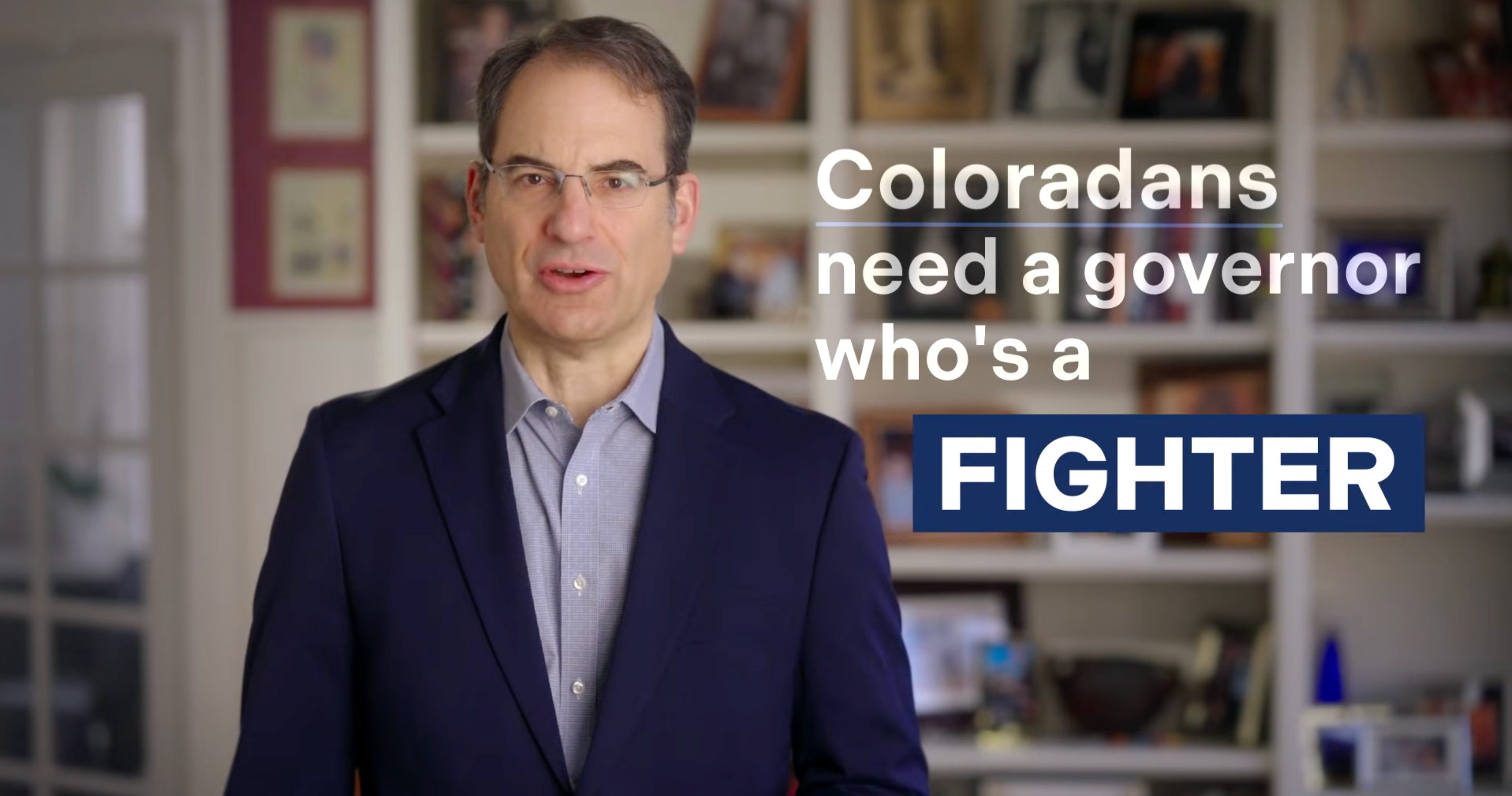
Colorado Attorney General Phil Weiser has made corporate accountability a key plank of his current run for governor. Washington Attorney General turned Governor Bob Ferguson ran with a strong record of tackling corporate interests. Kamala Harris, whose top performing 2024 ad was a pledge to ban price gouging, touted her wins against Big Pharma as Attorney General.
Many other state AGs have also made names for themselves taking on corporate interests, including Tom Miller in Iowa, Richard Blumenthal in Connecticut, Josh Hawley in Missouri, and Eliot Spitzer in New York
Indeed, it was state legislators across the Midwest and Texas who pioneered American antitrust law in the late 1800s. Riding a wave of agrarian populism, their targets were monopolists who’d seized control of oil, railroads, and agriculture. Wielding new state and federal laws at the turn of the century, prosecutors broke up monopolies and prosecuted price-fixers.
In 1976, Congress gave state AGs explicit power to challenge mergers under federal laws. States then shifted into higher gear under the corporate-friendly Reagan administration, says Professor Harry First, who led New York’s Antitrust Bureau from 1999 to 2001. “That’s when they emerged more as a counterweight to the federal government.”
When the Bush administration settled the prior Clinton administration’s efforts to break up Microsoft’s monopoly, the states pursued the case without them. “One of the byproducts of the Microsoft era is the infrastructure and continuity of multistate enforcement,” First said.
Reinforcements Required
Both current and former state enforcers told Liberty and Power that the increase in activity in recent years has left them stretched thin. Stepping up as a firewall against Trump’s efforts to concentrate media, economic, and political power may push them to breaking point.
While the federal DOJ Antitrust Division employs several hundred antitrust attorneys, a 2020 Yale study found that states employ roughly 150 between them. Some states have a single dedicated antitrust practitioner. Some have none at all.
Kwame Raoul’s office in Illinois says the long-running issue of resource constraints has become “more acute” in the past year, “as the federal government appears to be backing away from merit-based antitrust enforcement in favor of cutting deals with lobbyists at the public’s expense.”
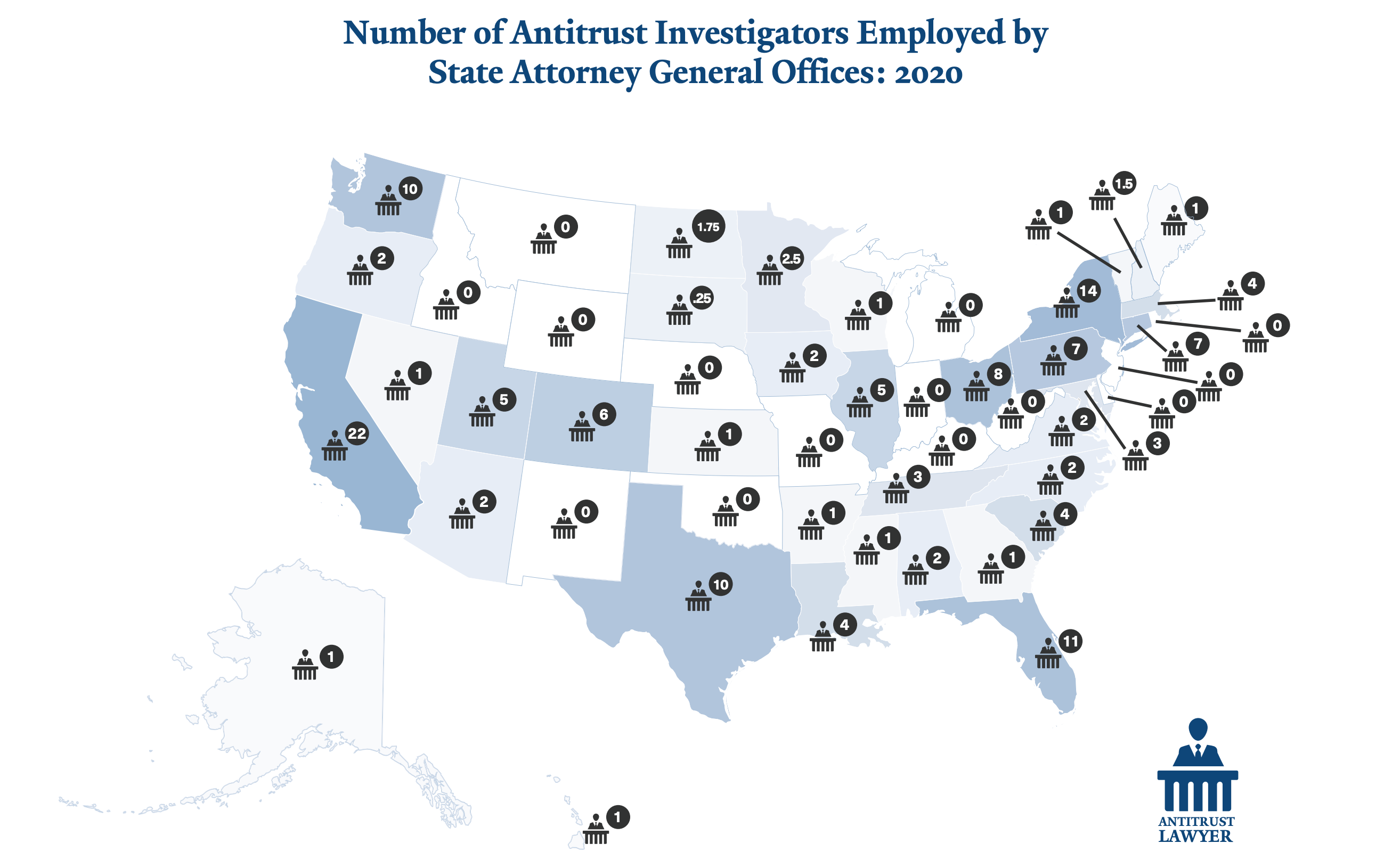
“It’s often a small team of attorneys managing a case against corporations who have dozens on their side,” Vaheesan says. New York and California’s determination to continue the Live Nation case is significant: They have the two biggest antitrust teams in the country, and other states will rely heavily on their resources as the case goes forward.
“If our democracy is going to survive this, states need to recognize that this wave of politicized media and corporate consolidation is a real frontline fight,” Vaheesan said. “The DOJ is hemorrhaging top-tier enforcers – states should be snapping them up. You can fight Trump’s consolidation of power and deliver on the affordability agenda. That’s an extraordinary return on investment.”
One attorney general who has been focused on building capacity is Rob Bonta, who secured $7.96 million from the California legislature in 2023 to fund a major expansion to his antitrust team. In the wake of the DOJ’s sudden retreat on Live Nation, there’s also now talk of California drawing on its $50 million ‘anti-Trump’ litigation fund to support antitrust enforcement.

In the longer term, Congress should consider ways to permanently fund state enforcement. That was the case that 45 state AGs made in a letter to Congress in 2021, without success.
The Live Nation trial resumed Monday, with the states hiring veteran antitrust litigator Jeffrey Kessler to step into the shoes of federal attorneys. What the jury will make of the abrupt switch in representation is unclear. The case is expected to last another four weeks.