


Last week, the Working Families Party shared previously unreported polling with us. It focused on working class voters in the most competitive races in the country and tested the most compelling narrative frame – a diagnosis of what’s going wrong in America, and how Democrats can fix it.
WFP told us the winning message actually surprised them because it used language that’s not often tested. It was called the “Monopolies Narrative” and it’s worth relaying in full:
Our freedom is being crushed by corporate monopolies and corruption. While honest businesses struggle, corporate monopolies buy up lobbyists and get the laws written to increase their power. Everything from eggs to housing to insurance to utility bills costs too much because only a few companies have unfairly destroyed competition. This November, we need to vote for Democratic leaders so that truck drivers, nurses, local business owners, farmers and pharmacists can rebuild a free and open economy and democracy.
It’s a message that puts monopolies at the center of affordability concerns and fears about the structure of the economy more broadly – and it ties that to corruption and a growing sense of democratic powerlessness.
It’s just one survey, but it’s reinforced by many others, and it backs up what other top pollsters – including Celinda Lake and Anat Shenker-Osorio – told us in January: picking fights with corporate power, naming specific monopolies, and connecting it all to affordability, corruption and democratic power offers a clear path to win back support from an angry and distrustful electorate.
Two things stand out:
The Monopolies Narrative proved significantly more compelling than a more partisan “MAGA Lies” message – blaming high prices on tariffs, the war in Iran and broken promises. As in similar research, that message was actually one of the least compelling tested for these voters.
Although the terminology of “monopoly power” might feel like it belongs in an economic textbook rather than a frontline campaign ad – it’s that phrasing that seems to have propelled it ahead of similar narratives about a rigged economy and class conflict.
An explanation can be found in previous research: The language of monopolies, competition and concentrated power is compelling for Democratic voters but it also has stronger appeal to Independents and Republicans than more partisan or ideological terminology.
A number of studies have shown that monopoly language doesn’t inherently trigger a partisan or pro-business response. “Republicans are actually slightly more put off than Democrats by corporate monopolies and their power,” President Clinton’s pollster Stanley Greenberg wrote in 2022 following a series of polls and focus groups. “Nobody offered the usual response about ‘wealth creators’ or ‘job creators,’ barring the one Trump voter.”
The word ‘monopoly’ required no explanation, he wrote, due to a “deepening consciousness” of all Americans around corporate monopolies, elites and the top 1 percent.
As WFP’s Ravi Mangla told Liberty & Power, it’s also something that “feels urgent” compared to more well-worn political rhetoric.
The upshot: Anti-monopoly messaging is highly effective in competitive districts where earning support from swing voters is key. It can be deployed by pro-business moderates, anti-establishment independents, and progressive leftists alike – and it is.
Analysis by Liberty & Power found that anti-monopoly messaging has become a recurring theme this year in more than a dozen competitive campaigns across the ideological spectrum.
In Michigan, progressive firebrand Abdul El-Sayed has warned that “if you’re a monopolist who wants to raise our prices, I’m dangerous.”
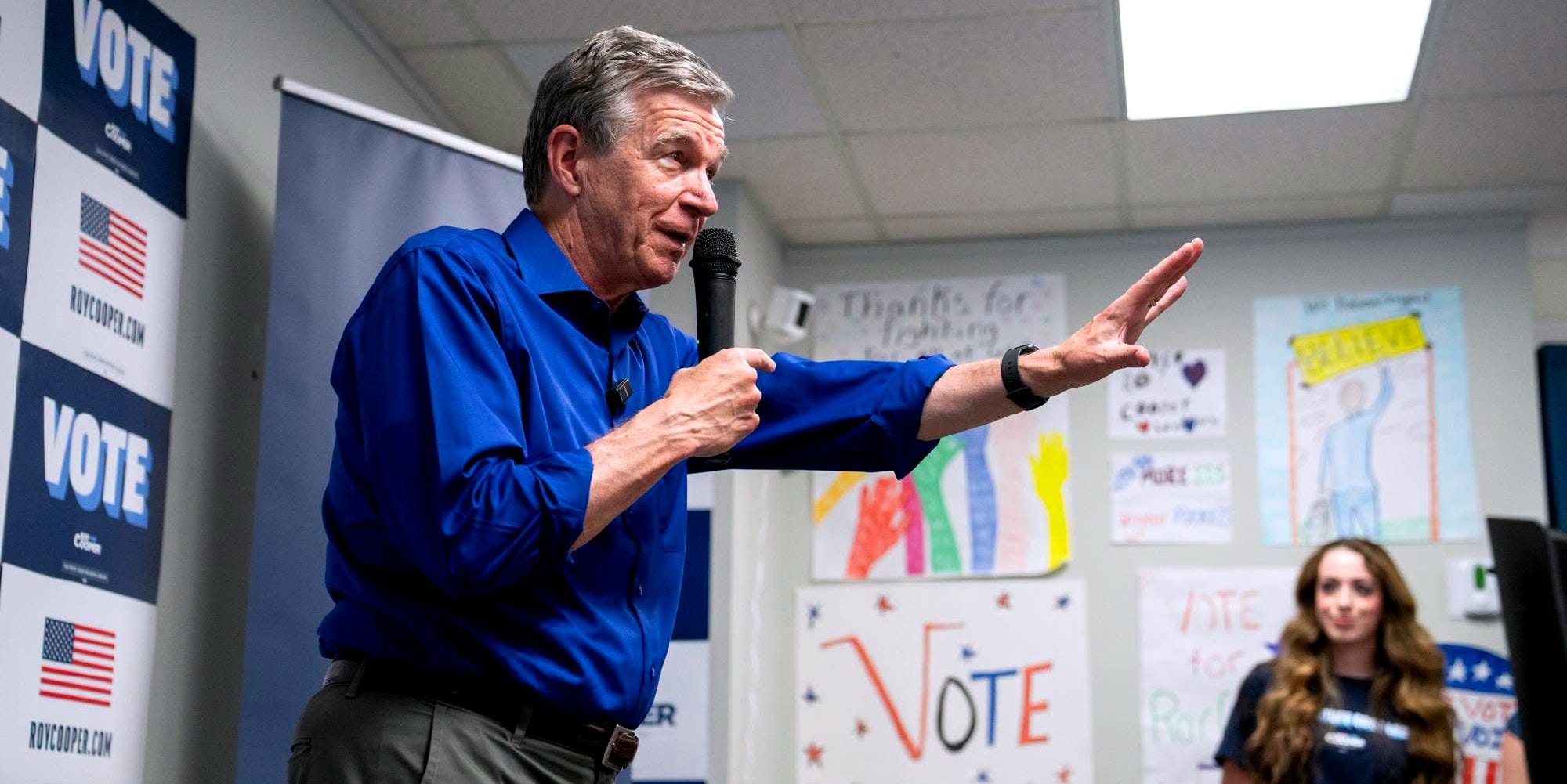
In North Carolina, self-branded moderate Roy Cooper has pledged to “block the mergers of grocery giants that reduce competition and raise prices.”
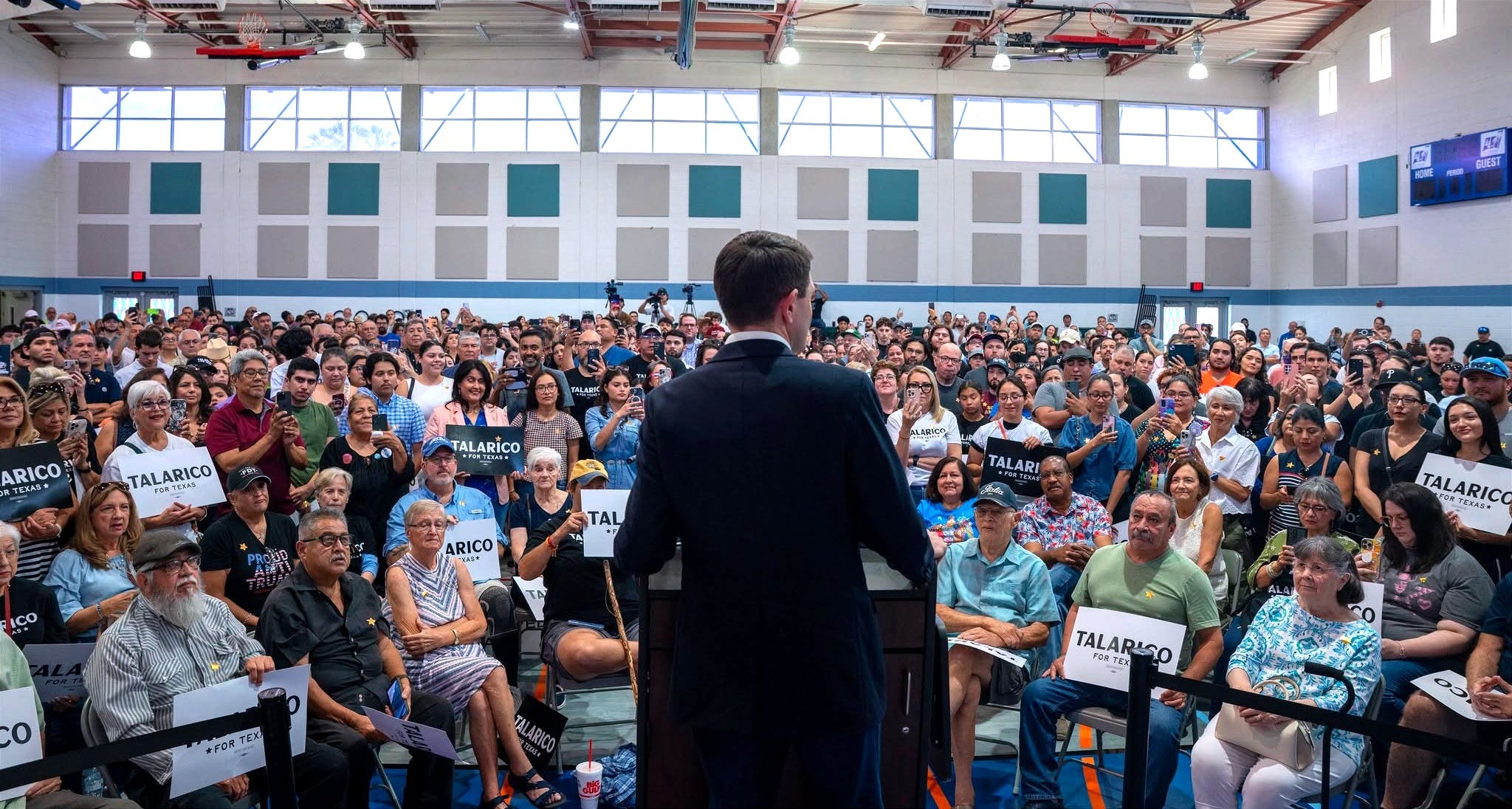
In Texas, James Talarico has said “it’s time to break up the Big Medicine monopolies that control our broken healthcare system.”
In Nebraska, Independent Navy veteran Dan Osborn has railed against meatpacking monopolists and Big Ag suppliers who are “stealing money from producers and making everything unaffordable for all of us.”
In Montana, Independent Senate candidate Seth Bodnar has made Big Tech a defining feature of his campaign and railed against politicians “bought and paid for by the same corporate monopolies that are ripping us off.”
In dozens of races, the DCCC is now urging fire-spitting economic populism in its red box guidance – urging allies to take aim at “wealthy billionaire donors” and “corrupt politicians and greedy corporations” who are driving up costs, including “ag monopolies” and “utility monopolies.”
It marks a clear course correction from the Harris campaign’s democracy and “opportunity economy” messaging in 2024, with candidates drawing clear lessons about which messages are breaking through in this populist moment – and which are falling flat.
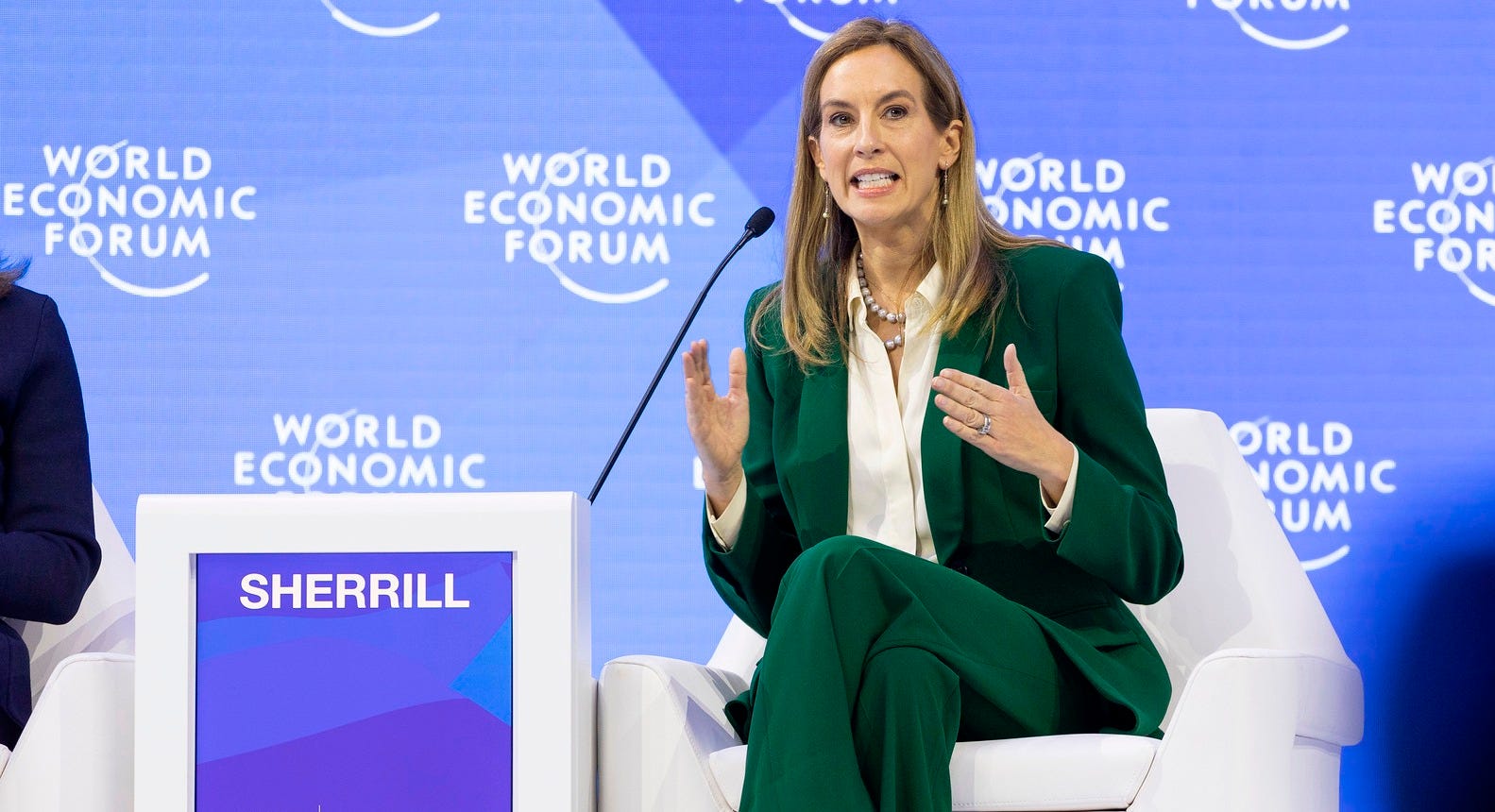
Last year, ‘Moderate Mikie’ Sherrill surged to victory in the New Jersey governor’s race after embedding anti-monopoly language across her entire affordability agenda – pledging to take on colluding landlords and monopolistic utilities, healthcare companies and grocery chains.
In 2024, several Democrats who over-performed Harris in competitive districts – including Chris Deluzio, Josh Riley and Pat Ryan – made anti-monopoly messaging a signature focus of their campaigns and subsequent congressional work.
Taken together, that should provide confidence for highly competitive campaigns across the political spectrum to weave anti-monopoly messaging into their affordability and anti-corruption pitches in the final stretch – heeding the advice of top strategists to name specific local monopolies voters already resent, explain how they’re driving up costs and pushing out small businesses, and pair attacks with fixes big enough to show they’re serious.
Further takeaways…
More Numbers: A full 58% of voters found the Monopolies Narrative convincing. It also ranked as the most believable, the most likely to make voters want to hear more, and the best at convincing voters the speaker understood people like them.
It was closely followed by related messages: combative class conflict (55%) AI job replacement (53%) and anger at a “rigged economy” (52%).
Bottom of the list: a partisan “MAGA Lies” message (49%) a patriotic pro-worker message (49%) and a message grounded in freedom and democracy (48%).
Progress: The party’s messaging has come a long way from the early 2020s, when we suffered through protracted debates over whether or not it was fair to blame higher prices on price gouging and corporate power.
WFP’s Ravi Mangla says the shift in messaging isn’t reflective of a change in the electorate but “the party grappling with what voters have been saying for a while.” Why has it taken so long? “The Democratic Party remains a cross-pressured party, one that is heavily funded by large corporations and corporate interests.”
Artificial Intelligence: AI is rightly surging in salience, and it’s not unrelated to monopoly power:
“It’s impossible to talk about AI without talking about monopoly,” Mangla said. “We have a handful of AI companies that control a huge market share, and the question of whether those companies are going to be regulated, or regulate themselves, is something at the top of voters’ minds.”
“Taking on the AI oligarchs who want to colonize our kids’ brains, jack up our electric bills, and eliminate jobs – there’s no better way to show that you are against corruption, that you are on the side of people instead of the powerful,” Alyssa Cass told us last week.
Economy vs Democracy: The research backs up what Celinda Lake and Anat Shenker-Osorio told Liberty and Power in January about the connection between democracy and the economy:
“I’ve been surprised by the degree to which people understand that our political problem—the authoritarianism problem—is actually an economic problem [...] Too much wealth is in far too few hands.” – Anat Shenker-Osorio
“If this were truly a democracy, if people really had their say, our prescriptions would not cost more than Canada. We would not have unregulated AI. We would not be relaxing the rules on corporate mergers of everything.” – Celinda Lake.
The Fine Print: Working Families Party conducted the national survey of N=2,512 working-class registered voters, including an oversample of N=508 voters in Cook Political Report Toss Up Districts, fielded August 13-16, 2026. The survey tested nine candidate narratives. After each narrative, voters rated it on four performance measures: convincing, believable, whether the speaker understands people like them, and whether it made them want to learn more.
‘Smart Republicans Are Terrified’: Will Democrats Finally Seize the Big Tech Backlash?

In a country where every issue risks a partisan battle – from gas stoves to meat consumption – it’s striking that a defining national question remains unclaimed: which party will stand up to Big Tech and shape the future of AI.
7 Hard Lessons Democrats Must Learn in 2026

In the closing weeks of 2025, Liberty and Power conducted in-depth interviews with a cross-section of leading Democratic pollsters and messaging experts on the party’s best path forward. The conversations included vet…
The Next Economic Agenda Isn’t Just About Money. It’s About Power.

For years, members of Congress have traveled to their states and districts and heard variations of the same complaint: “Life feels much harder than it should.”
Why Data Center Rage Is Poised to Become A Political Earthquake

In June last year, Governor Josh Shapiro stood in front of an excavator and a crowd of construction workers in Berwick, Pennsylvania, to herald Amazon’s plans to spend $20 billion building a network of AI data centers across the state.
Maybe so, but what of the big pharma monopoly on health care the party has been enabling with their naive trust in "experts" whose strings are pulled by big pharma and big medicine?